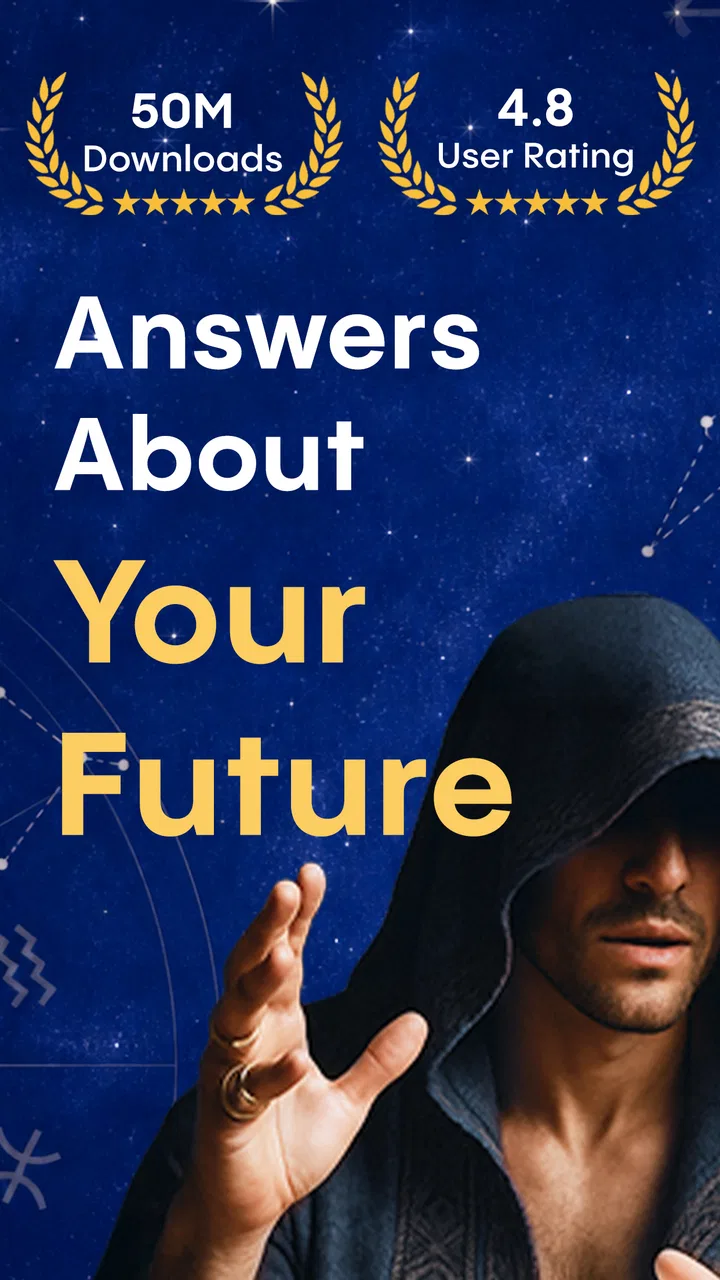
Faladdin: Tarot & Horoscopes
- 4.4
- Rating
- 10.00M
- Installs
- Free
- Price

 Analysis by App-foxy
I opened Faladdin: Tarot & Horoscopes expecting a light way to explore tarot and astrology, and that is still the best way to understand it. This free lifestyle app from Truemium Ou brings tarot readings, daily astrology, and birth-chart material into one place. I found it most enjoyable when I treated the readings as prompts for reflection rather than fixed predictions.
The app has clearly reached a large audience: it has more than ten million installs, an average rating of 4.4, and roughly two hundred thirty-five thousand ratings. Those figures suggest that the concept works for many people, but popularity does not make every reading personally meaningful. My experience was strongest when I used it casually, compared different sections, and avoided making important decisions from a single result.
How Faladdin feels to use today
The main appeal is convenience. Instead of switching between a tarot app, a horoscope service, and a separate birth-chart tool, I can look for all three styles of content in the same app. That makes it easy to build a small daily routine: check the astrology section in the morning, explore a tarot reading when I have a particular question, and return to the birth chart when I want broader context.
You May Also Like

 Blood Strike: 2.5 Anniversary
Blood Strike’s Loadouts Turn Every Drop Into a Tactical Gamble
A close look at Blood Strike’s custom loadouts: how fast access to signature weapons reshapes its battle royale rhythm, rewards preparation, and narrows the gap between fights.

 Pandora - Music & Podcasts
Pandora’s Music Is Easy to Start, but Harder to Recover
Pandora’s strength is its low-effort path from a seed to a station. Its weak spot is how much confidence it asks you to place in connection, setup, and quiet recovery.

 8 Ball Pool
 Is Built on Rivalries, Rematches, and Routine
A close look at the rivalries, rematches, shared routines, and unanswered safety questions that turn a quick pool match into a persistent mobile community.

 Samsung Music
’s Quiet Strength Is Playing What You Already Own
Its reach comes less from spectacle than from dependable access to a personal library. That simplicity is both the app’s strongest retention engine and its ceiling.

 AccuWeather: Weather Radar
AccuWeather Review: A Quick, Clear Forecast for Everyday Decisions
For everyday plans, the best forecast is the one you can understand quickly. AccuWeather makes rain timing, radar, and local conditions easy to act on, with a few trade-offs.

 Hill Climb Racing
Why Hill Climb Racing Still Turns Crashes Into One More Run
A tiny car, a bumpy hill and one more upgrade: Hill Climb Racing keeps resurfacing because its simple chaos makes every near-miss feel personal.
More From Our News Desk
View All News


The interface is aimed at people who enjoy guided discovery rather than technical astrology. I do not need to know the names of every card or understand chart terminology before starting. The experience presents spiritual content in an approachable format, which is useful for a newcomer who might find dedicated astrology software intimidating.
At the same time, the simplicity has a trade-off. I would not use Faladdin as a replacement for a serious astrology reference or an in-depth tarot study tool. Its value is in the interpretation and the moment of reflection, not in giving me a complete educational framework for learning symbolism, planetary mechanics, or reading technique.
That distinction matters because the app can feel personal even when the result is broad. A sentence about work, relationships, or an upcoming change may seem unusually relevant simply because those subjects are already on my mind. I found it healthier to ask, “What does this make me think about?” rather than, “Is this guaranteed to happen?” The most useful habit is to treat each reading as a conversation starter with myself.
Tarot works best when I bring a clear question
The tarot side is more satisfying when I begin with a focused situation. A vague request such as wanting to know everything about the future can produce an entertaining reading, but it gives me less to work with afterward. A narrower question about how I am approaching a difficult conversation or what I may be overlooking in a decision creates a better opportunity for reflection.
I also learned not to repeat the same question immediately after receiving an answer I disliked. Doing that turns the app into a reassurance loop rather than a useful reflective tool. Waiting, writing down the first reaction, and returning later gives the reading more value. This is a small workflow change, but it prevents the experience from becoming endless prediction checking.
People who already understand tarot may notice that the app emphasizes accessible interpretation over teaching the full reasoning behind a spread. That is not necessarily a weakness for casual users. It is a weakness for anyone hoping to practice reading independently, because a polished interpretation does not automatically explain how to reach it from the card imagery.
Daily astrology is convenient, but it should not control the day
The daily astrology feature fits naturally into a morning routine. I can read it with coffee and use it as a gentle prompt to consider my mood, priorities, or interactions. It is more enjoyable when I compare the message with what actually happens rather than assuming every line must apply.
There is also a practical reason to keep expectations modest: daily horoscope writing tends to address broad areas of life. That makes it easy to recognize something familiar, but it also means the guidance may not be specific enough for a complicated personal situation. If I need concrete planning, I would use a calendar, notes app, or direct conversation instead of relying on a horoscope.
The feature is a good fit for someone who likes a short ritual and a little imaginative framing. It is less suitable for a reader who wants a detailed explanation of transits, houses, aspects, and timing. Faladdin’s approachable style removes much of the learning curve, but it also leaves less room for the analytical depth found in specialist astrology tools.
The birth chart adds context, with a learning curve
The birth-chart area is the part I would explore after trying the simpler daily content. It offers a more personal direction than a general horoscope because it is connected to birth information, yet a chart can still feel confusing if I do not know what the different elements represent. I would take time to read each explanation instead of scrolling quickly through every interpretation.
A useful approach is to focus on one theme at a time. For example, I might look at material related to communication first, then return another day to examine relationships or motivation. Trying to absorb the entire chart in one sitting makes the experience feel dense, while a slower approach makes it easier to notice which descriptions genuinely resonate and which do not.
This is also where comparison with alternatives becomes important. A dedicated birth-chart app may provide more visual detail or more technical explanations. Faladdin is preferable when I want the chart experience alongside tarot and daily astrology in one friendly environment. It is not my first choice when the main goal is formal study or detailed chart analysis.
What has changed for the current version and what that means
The current Android version is 5.1.37, and the app supports Android 7.0 and later. That gives existing users a clear compatibility point when deciding whether to update or install it on an older phone. The version number also shows that Faladdin is a mature product rather than a brand-new experiment, although a version label alone does not tell me how much of the interface has changed between releases.
The app was released on January 18, 2017, so its present form is the result of several years of continued development. I see that maturity in the way tarot, astrology, and birth-chart content sit together as parts of one lifestyle experience. Someone returning after a long break may still recognize the central idea, while newer users can start without needing any previous familiarity.
For existing users, the most important practical point is that the core promise remains easy to understand: open the app when you want a reading, a daily horoscope, or a look at your chart. I would not expect a version update to transform it into a professional astrology suite. The product’s direction appears more focused on making spiritual content approachable than on turning every feature into an advanced research tool.
That continuity is helpful for casual users. If I have built a habit around checking a daily reading, I do not need to rethink the entire way I use the app. New users can also judge it fairly quickly: after exploring the three main content types, I can tell whether the tone and level of detail suit me.
There is a less obvious consequence of a mature, content-centered app. The longer I use it, the more important it becomes to create my own boundaries. I would avoid checking readings repeatedly during an anxious day, and I would never use them as the sole basis for medical, financial, legal, or relationship decisions. The app can support introspection, but it cannot replace qualified advice or direct evidence.
Everyday uses that feel natural
One realistic use is a quiet Sunday evening. I might open a tarot reading after a busy week, note which part of the interpretation catches my attention, and then write one practical question in my notes: what can I actually do about this? The reading becomes a bridge to planning rather than a substitute for planning.
Another use is sharing the experience with a friend who is curious about tarot but does not want to buy a deck or learn a full system immediately. Because Faladdin combines several related formats, we can compare how a tarot message feels beside a daily horoscope or birth-chart interpretation. That makes it more social and approachable than a purely technical chart calculator.
I also found value in using the app when I wanted a prompt for journaling. Instead of saving every prediction, I would record the date, the main theme, and my own reaction. After a few entries, the useful pattern was often about my concerns rather than future events. That is a more grounded way to benefit from a spiritual app, and it costs nothing beyond a few minutes of attention.
For someone choosing between Faladdin and separate alternatives, the decision is mainly about depth versus variety. Faladdin wins on having multiple forms of spiritual content in one place and presenting them in a beginner-friendly way. Separate tarot or astrology apps may be better when I want specialized controls, structured lessons, or more technical explanations. A general horoscope website may be faster for a single daily glance, but it will not necessarily offer the same combined experience.
Where the experience can become frustrating
The first limitation is interpretive certainty. Readings can sound confident, and that tone may encourage some users to treat general guidance as a definite forecast. I had to remind myself that an engaging result is not the same as verified knowledge. Anyone who tends to worry about predictions should use the app sparingly or skip predictive content altogether.
The second limitation is the possible gap between curiosity and commitment. A casual reader may enjoy a few free interactions and then encounter parts of the experience connected to optional purchases. Faladdin is free to download and use, while its in-app purchases range from ninety-nine cents to one hundred forty-nine dollars and ninety-nine cents per item. I would check the cost carefully before confirming anything and avoid buying simply because a reading creates urgency.
That broad purchase range makes self-control especially important for users who are emotionally invested in an answer. I would set a personal rule before exploring paid material: no purchase during a stressful moment, no repeated buying to obtain a preferred result, and no spending that would make the experience feel like a necessity. The app is easiest to enjoy when it remains entertainment and reflection rather than a financial habit.
Another point is privacy comfort. Birth-chart experiences naturally involve personal birth information, and some users may not want to enter those details into any spiritual service. I would decide in advance what information I am comfortable providing and use only the features that match that comfort level. If I want completely offline reflection, a physical tarot deck and a notebook are a better fit.
The age rating is Everyone, which reflects its broad accessibility, but that does not mean every message will suit every emotional situation. Younger users may need guidance from a parent or trusted adult about treating predictions as entertainment. Adults should apply the same principle when a reading touches a sensitive subject.
Who should try it, and who should choose something else
I would recommend Faladdin to a curious beginner who wants tarot, daily astrology, and birth-chart content without assembling several separate tools. It is also a good match for someone who enjoys short rituals, journaling prompts, and symbolic language. The free entry point makes it easy to explore the style before deciding whether it belongs in a regular routine.
I would be more cautious recommending it to someone seeking professional-level astrology analysis, formal tarot education, or evidence-based answers about major life choices. A specialist app, a book, a qualified practitioner, or a direct practical resource may serve those needs better. The right alternative depends on whether the goal is learning, technical analysis, emotional reflection, or simple entertainment.
I would also suggest skipping it if predictions tend to increase anxiety. No app can guarantee that a reading will be reassuring, and repeatedly searching for certainty can make uncertainty feel worse. In that situation, a journaling app without predictive content, a conversation with someone trusted, or professional support would be a healthier choice.
What I would watch as I keep using it
My main test for future updates would be whether the app becomes clearer about the difference between reflection and certainty. Explanations that encourage thoughtful interpretation would improve the experience more than simply adding more dramatic predictions. I would also value smoother ways to revisit meaningful readings without encouraging compulsive checking.
I would watch how the current version handles the balance between its free experience and optional purchases. The free price is inviting, but the upper end of the purchase range means users should remain alert to what they are selecting. Clear presentation and calm decision-making matter more here than the number of available readings.
I would also pay attention to whether the birth-chart section becomes easier for beginners to understand without losing its personal feel. The strongest version of Faladdin, in my view, is not one that tries to outdo every specialist tool. It is one that helps a curious person move from a quick horoscope to a more thoughtful look at personal themes, while keeping the experience easy to navigate.
After using it, I see Faladdin as a polished, accessible lifestyle app for spiritual curiosity rather than a source of dependable forecasts. Its combination of tarot, daily astrology, and birth-chart content is genuinely convenient, and its long presence on Android gives it a sense of continuity. The rating of 4.4 from around two hundred thirty-five thousand ratings shows that many users enjoy that formula, but personal fit matters more than the headline number.
I would install it for a relaxed evening, a journaling prompt, or a low-pressure introduction to these subjects. I would not install it expecting scientific prediction, professional chart work, or answers that remove the need to think and act for myself. Used with that boundary, Faladdin: Tarot & Horoscopes can be an enjoyable companion for reflection. Its best result is not telling me exactly what will happen; it is helping me notice what I am already feeling and decide what to do next.
FAQs for Faladdin: Tarot & Horoscopes
01What is Faladdin: Tarot & Horoscopes?
Faladdin: Tarot & Horoscopes is a fortune-telling and astrology app that offers digital readings based on tarot, coffee cup interpretations, daily horoscopes, and other personalized predictions. After entering personal details or uploading an image when required, users receive an entertaining interpretation designed for reflection and curiosity. The app should be viewed as a lifestyle and entertainment experience, not as a scientifically proven method of predicting future events.
02Is Faladdin: Tarot & Horoscopes free to download and use?
The app can generally be downloaded for free, but some readings, features, or faster results may require in-app purchases, credits, or a subscription. During testing, users should pay close attention to the pricing information shown before confirming any purchase. Availability of free readings and promotional offers may change over time, and subscription terms should be reviewed carefully to avoid unexpected recurring charges.
03What information does Faladdin require from users?
Depending on the feature selected, Faladdin may request details such as a name, birth date, zodiac information, relationship status, or other personal preferences. Some readings may also involve uploading photographs, including images of a coffee cup or tarot cards. Before using the app, review its privacy policy and permissions so you understand how submitted information, photos, and account data may be collected, stored, or processed.
04Are Faladdin’s tarot and horoscope readings accurate?
Faladdin’s readings are generated for entertainment and personal reflection rather than verified prediction. Results can feel relevant because they use familiar astrological themes, symbolic interpretations, and information supplied by the user, but they should not be treated as professional advice or guaranteed forecasts. Avoid relying on the app for medical, financial, legal, relationship, or other important life decisions.
05Does Faladdin work on both Android and iPhone?
Faladdin: Tarot & Horoscopes is designed for mobile users and is commonly available through official Android and iOS app stores, although supported versions and feature availability can vary by region and device. Before downloading, check the store listing for operating-system requirements, recent update information, storage needs, and user reviews. An internet connection is typically needed to request readings and load personalized content.
Pros
- Offers tarot
- coffee cup
- and horoscope readings in one app.
- Personalized readings are quick and easy to request.
- Supports multiple languages for a wider international audience.
- Clean interface makes browsing readings simple for new users.
- Daily horoscope updates encourage regular engagement.
Cons
- Many detailed readings require coins or paid purchases.
- Interpretations may feel too general for some users.
- Results are entertainment-focused
- not professional guidance.
- Frequent notifications may become distracting over time.
- Accuracy can vary depending on the reading type selected.

Faladdin: Tarot & Horoscopes
Gallery